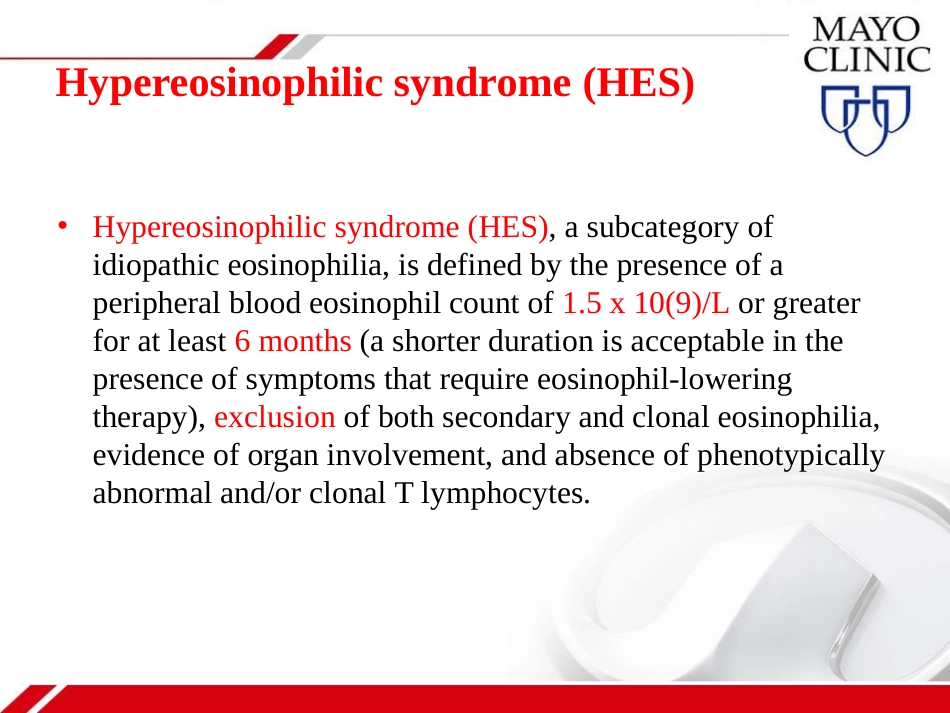
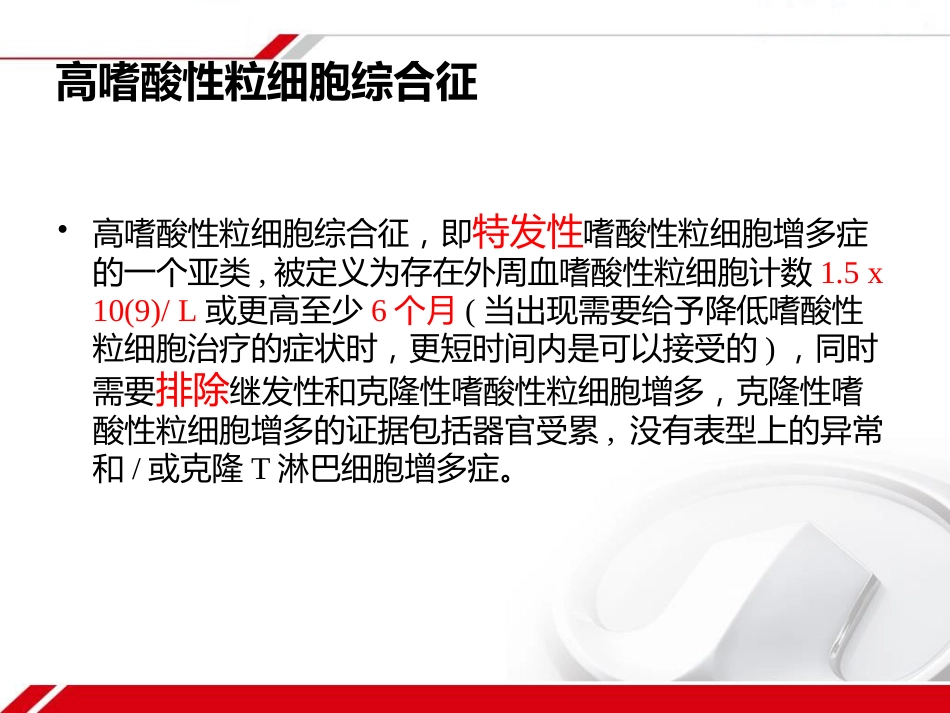
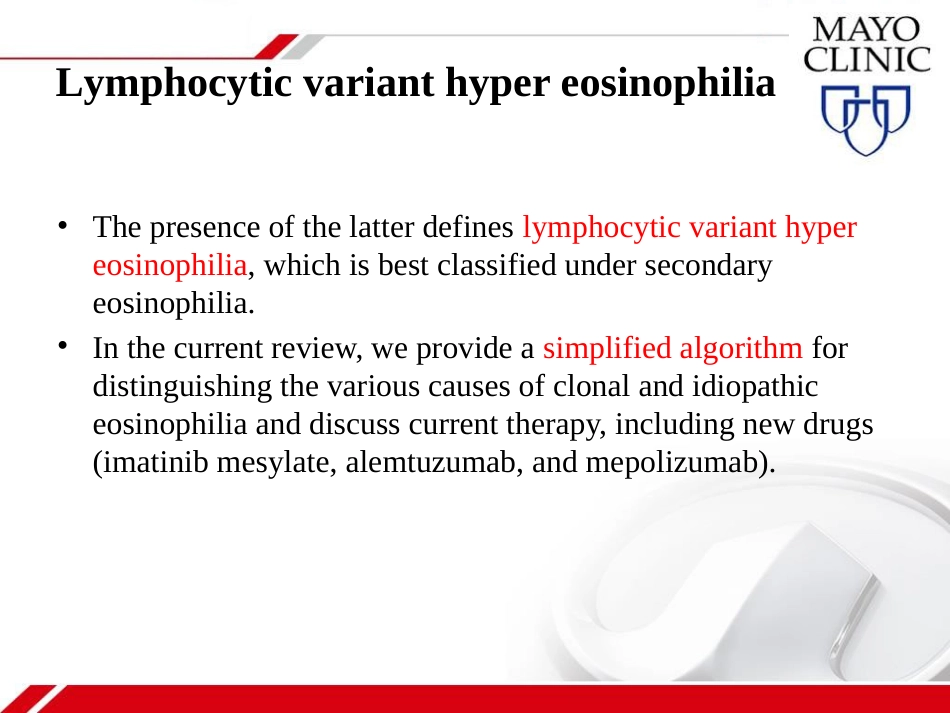
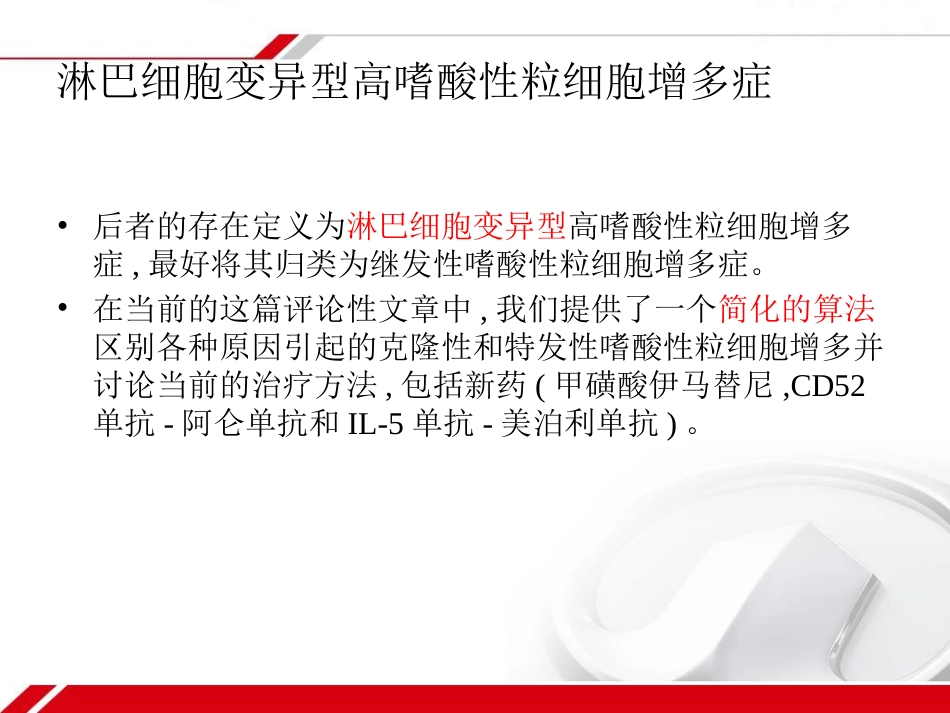
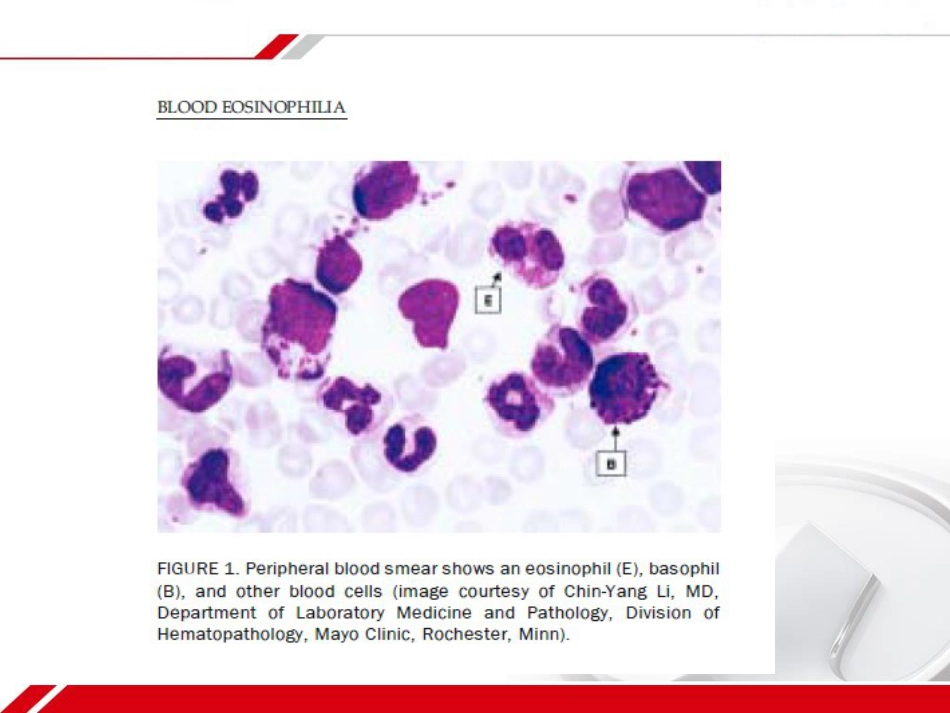
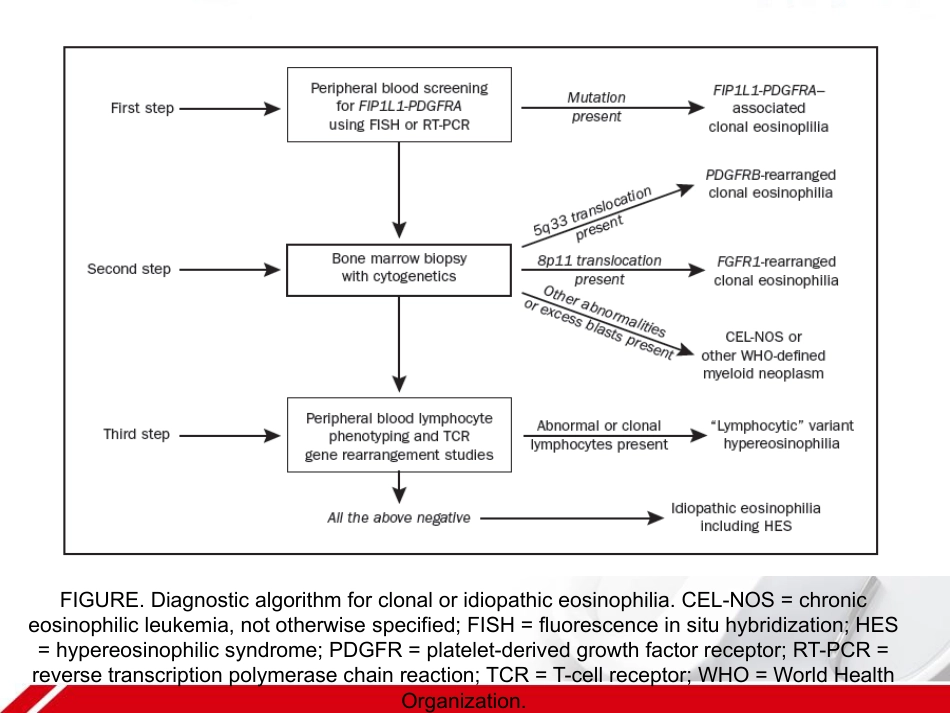
高嗜酸性粒细胞综合症及嗜酸性粒细胞增多症:诊断要点和治疗进展Tefferi A, Gotlib J, Pardanani A. Hypereosinophilic syndrome and clonal eosinophilia: point-of-care diagnostic algorithm and treatment update. Mayo Clin Proc. 2010;85(2):158-64.Acquired eosinophilia• Acquired eosinophilia is operationally categorized into secondary, clonal, and idiopathic types. • Causes of secondary eosinophilia include parasite infections, allergic or vasculitis conditions, drugs, and lymphoma. • Clonal eosinophilia is distinguished from idiopathic eosinophilia by the presence of histologic, cytogenetic, or molecular evidence of an underlying myeloid malignancy. 获得性嗜酸性粒细胞增多症• 获得性嗜酸性粒细胞增多症被人为的分为继发性, 克隆性和特发性三种类型。• 继发性嗜酸性粒细胞增多的原因包括:寄生虫感染、过敏或血管炎, 药物和淋巴瘤。• 克隆性嗜酸性粒细胞增多是区别于特发性嗜酸性粒细胞增多的,通过组织学、细胞遗传学、或潜在的髓系恶性增生的分子证据。Clonal eosinophilia• The World Health Organization classification system for hematologic malignancies recognizes 2 distinct subcategories of clonal eosinophilia: chronic eosinophilic leukemia, not otherwise specified (CEL-NOC) and myeloid/lymphoid neoplasms with eosinophilia and mutations involving platelet-derived growth factor receptor alpha/beta (PDGFRA or PDGFRB) or fibroblast growth factor receptor 1 (FGFR1). 克隆性嗜酸性粒细胞增多症• 世界卫生组织恶性血液病分类系统将克隆性嗜酸性粒细胞增多症分为2 个不同的亚型:未另行规定的慢性嗜酸性白血病和伴有血小板源生长因子受体α/β 或纤维母细胞生长因子受体1 基因突变的髓系/ 淋巴系肿瘤。Clonal eosinophilia• Clonal eosinophilia might also accompany other World Health Organization-defined myeloid malignancies, including chronic myelogenous leukemia, myelodysplastic syndromes, chronic myelomonocytic leukemia, and systemic mastocytosis. 克隆性嗜酸性粒细胞...