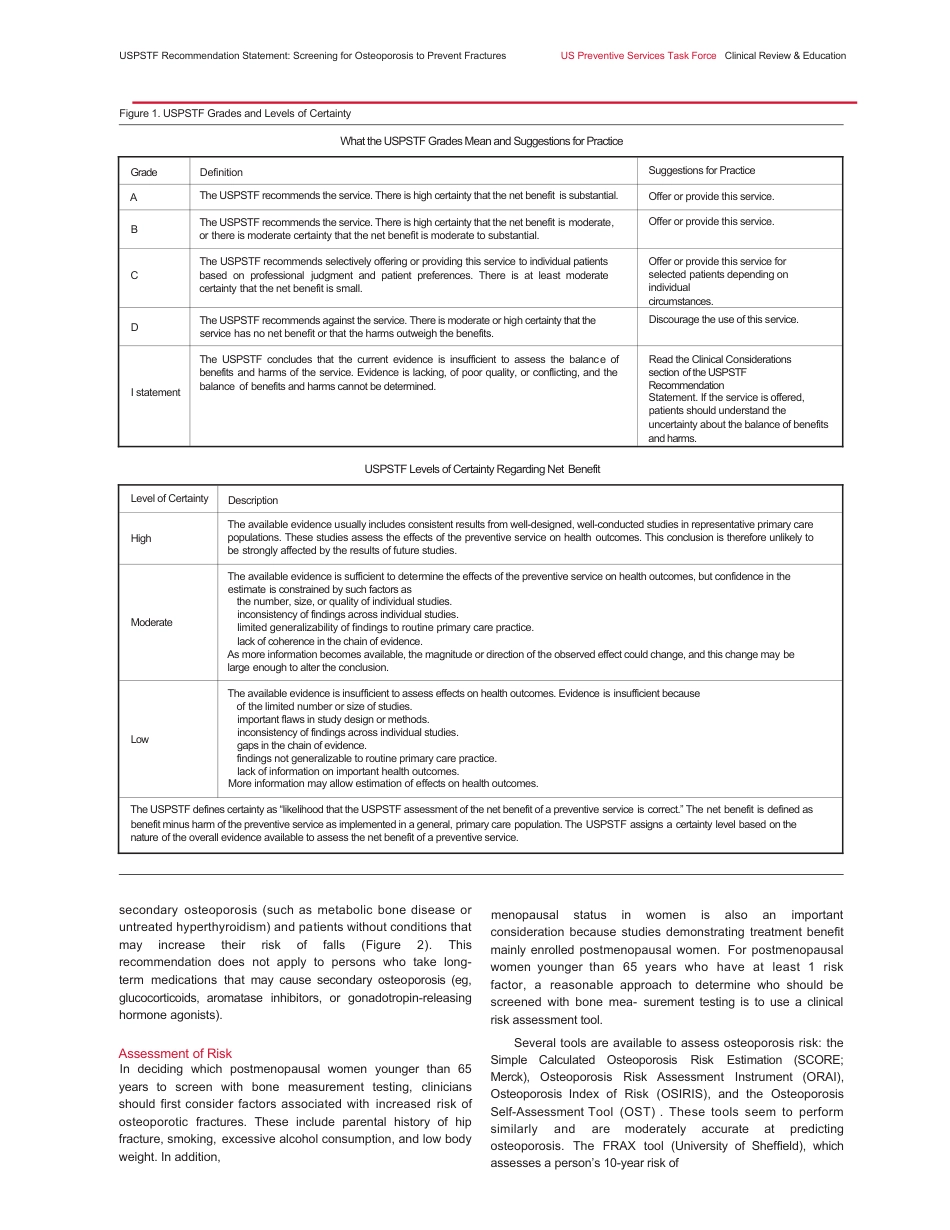
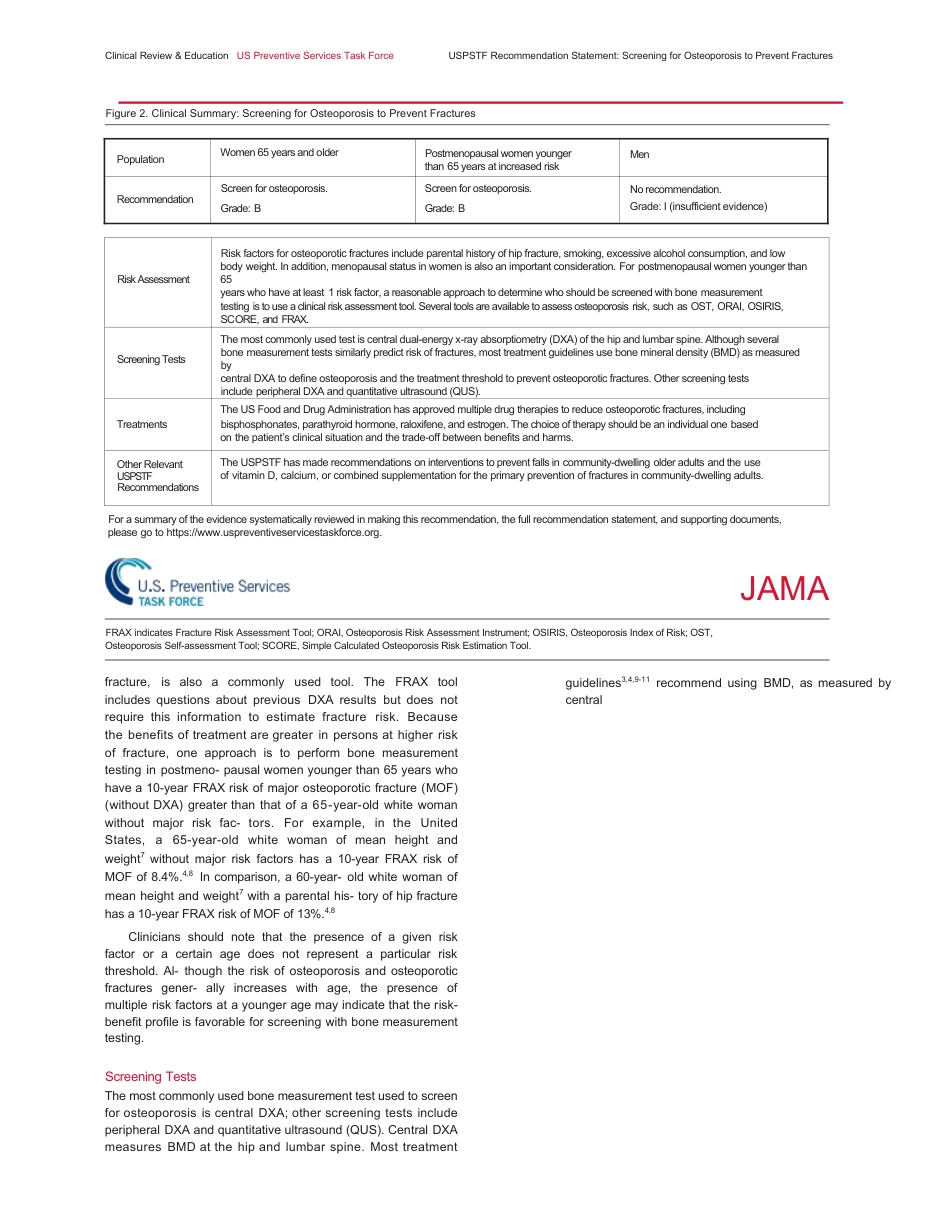
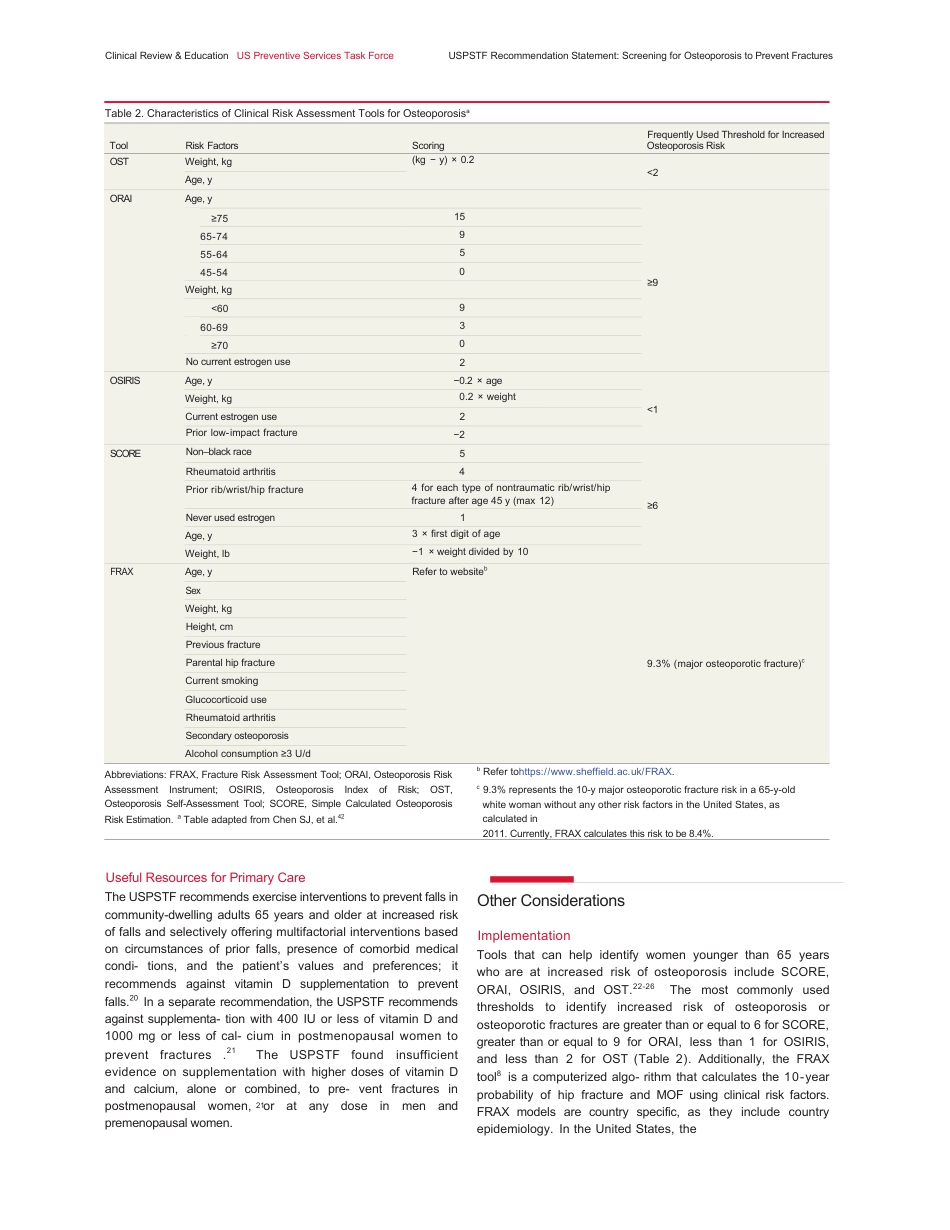
Clinical Review & EducationJAMA | US Preventive Services TaskForce | RECOMMENDATION STATEMENTScreening for Osteoporosis to Prevent FracturesUS Preventive Services Task ForceRecommendation StatementUS Preventive Services Task ForceEditorialpage 2483Author Audio InterviewRelated articlepage 2532and JAMA Patient Pagepage 2566CME Quiz atjamanetwork.com/learningandCME Questionspage 2554Related article atjamainternalmedicine.comAuthor/Group Information: The US Preventive Services Task Force(USPSTF) members are listed at the end of this article.Corresponding Author: Susan J. Curry, PhD, University of Iowa,111 Jessup Hall, Iowa City, IA 52242 CONCLUSIONSAND RECOMMENDATION The USPSTF recommends screening for osteoporosis with bone measurement testing to prevent osteoporotic fractures in women 65 years andolder. (B recommendation) The USPSTF recommends screening for osteoporosis with bone measurement testing to prevent osteoporotic fractures in postmenopausal women younger than 65 years at increased risk of osteoporosis, as determined by a formal clinical riskassessment tool. (B recommendation) The USPSTF concludes that the current evidence is insufficient to assess the balance of benefits and harms of screening for osteoporosis OBJECTIVE To update the 2011 US Preventive Services Task Force (USPSTF) recommendation on screening for osteoporosis.FINDINGS The USPSTF found convincing evidence that bone measurement tests are accurate for detecting osteoporosis and predicting osteoporotic fractures in women and men. TheUSPSTF found adequate evidence that clinical risk assessment tools are moderately accurate in identifying risk of osteoporosis and osteoporotic fractures. The USPSTF found convincing evidence that drug therapies reduce subsequent fracture rates in postmenopausal women. The USPSTF found that the evidence is inadequate to assess the fftif dEVIDENCE REVIEW The USPSTF reviewed the evidence on screening for and treatment ofosteoporotic fractures in men and women, as well as risk assessment tools, screeningintervals, and efficacy of screening and treatment in subgroups. The screening population was postmenopausal women and older men with no known previous osteoporotic fractures and no known comorbid conditions or medication use associated with secondaryosteoporosis.IMPORTANCE By 2020, approximately 12.3 million individuals in the United States older than 50 years are expected to have osteoporosis. Osteoporotic fractures, particularly hipfractures, are associated with limitations in ambulation, chronic pain and disability, loss ofindependence, and decreased quality of life, and 21% to 30% of patients who experience ahip fracture die within 1 year. The prevalence of primary osteoporosis (ie, osteoporosiswithout underlying disease) increases with age and differs by race/ethnicity. With the aging of the US population, the potential preventable burden is likely to increase in future years.Clinical Review ...